Low screening adherence
Even when screenings are covered, participation remains low. Outreach is generic, confusing, or easy to ignore, leaving large portions of the population unscreened.
Cancer outcomes and costs are shaped long before treatment begins. Yet most screening programs are fragmented, slow, and poorly followed, leaving people to fall through the cracks. Color delivers a clinically led, end-to-end approach to prevention, early detection, and diagnosis that identifies risk sooner, closes screening gaps, and accelerates time to diagnosis.
Early detection is the single most powerful lever to improve cancer outcomes and reduce spend. Yet today’s system consistently fails to deliver it. Screening is treated as a one-time task rather than a clinically managed strategy, abnormal results are too often left without follow-up, and diagnosis frequently takes months instead of weeks. High-risk individuals go unidentified, allowing disease to progress unnoticed. Together, these breakdowns lead to late-stage diagnoses, emergency presentations, and higher-cost treatment that could have been avoided.
Even when screenings are covered, participation remains low. Outreach is generic, confusing, or easy to ignore, leaving large portions of the population unscreened.
Nearly half of abnormal screening results do not receive timely follow-up. Without clinical ownership, next steps stall and cancer progresses.
Fragmented referrals, long waits for imaging and biopsy, and incomplete workups stretch diagnosis timelines by months. Those delays directly impact survival and cost.
Improving early detection takes more than sending people to screenings. It requires expert risk assessment, active clinical management, and accountability for every next step.
Access provides the expert knowledge and support needed no matter where a person lives.
50-state clinical team
Same or next day visits
Oncologists available when questions come up
Support that reaches people wherever they live
Speed turns uncertainty into answers. It shortens the time between concern and clarity, and helps catch cancer before it has a chance to advance.
Fast review of symptoms, screening results, and imaging
Quick completion of next steps when something is abnormal
Rapid referrals for imaging, biopsy, or specialist care
Ongoing follow-up so nothing stalls or gets lost
Direct clinical care means there’s always someone responsible for what happens next. No handoffs. No missed steps. No unanswered results.
Cancer-specialized clinicians who assess risk and take action
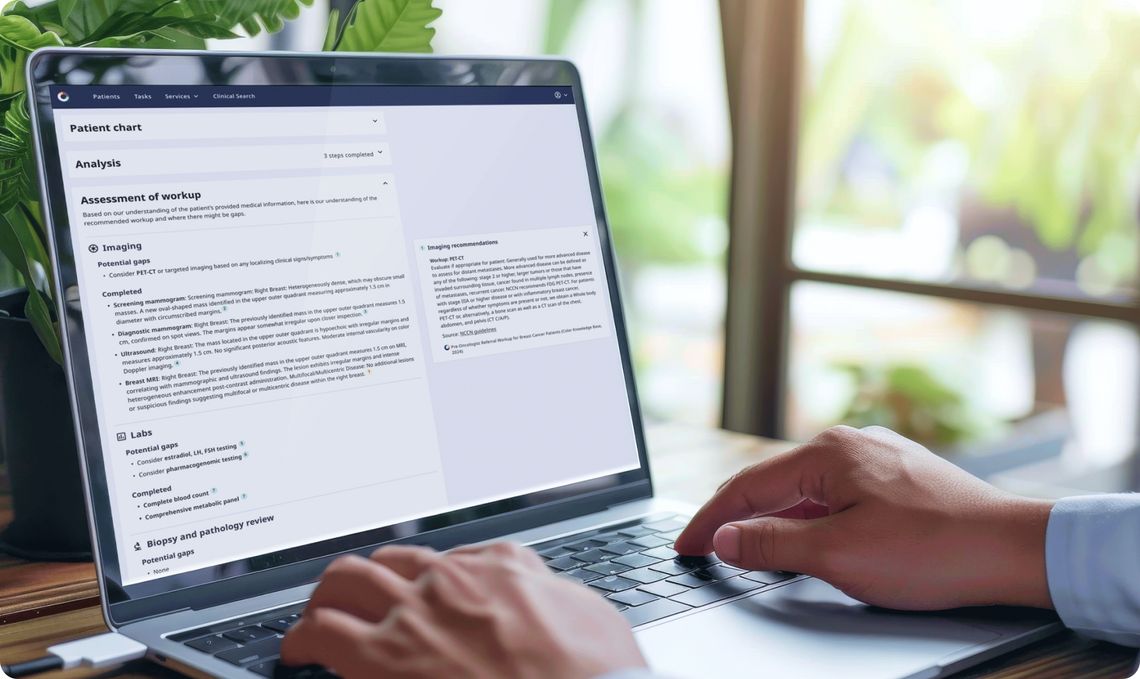
Tests ordered, results reviewed, and next steps clearly defined
Direct collaboration with radiologists and specialists
One clinical team accountable from screening through diagnosis
faster diagnosis
increase in screening adherence
reduction in avoidable imaging spend
follow-up on abnormal screening results
population enrollment in year one
Color begins with a comprehensive clinical assessment that stratifies risk across the population. This approach is more effective at identifying who actually needs screening and which test is appropriate, rather than relying on age alone or one-size-fits-all guidelines. This model has been recognized in peer-reviewed research, including publication in the Journal of the American Medical Association.
These steps ensure concerns are fully evaluated and diagnosis moves forward quickly, without missed information or unnecessary delays.
This creates clarity and consistency during a stressful time, so people understand what’s happening and what comes next.
These interventions help prevent prolonged uncertainty, emergency presentations, and later-stage discovery.
Early detection can be emotionally overwhelming. Color integrates whole-person support to help people take action and stay engaged.
On March 16th, 2020, the first stay-at-home orders were issued in the San Francisco Bay Area. Exactly two weeks later, Color had built a CLIA-certified COVID-19 testing lab and digital platform. One week after that, Color and the City and County of San Francisco launched one of the first high-capacity, public COVID testing sites.
In the months and years to come, Color supported employers, schools, and Federal, state, and local health departments across the country—Thermo Fisher Scientific, the CDC, the State of California and the Commonwealth of Massachusetts, Chicago Public Schools, to name a few—to provide critical access where people worked, played, learned, and worshiped. When antiviral treatment became available, Color ran three-quarters of the country’s state-level telehealth programs, with prescription delivery within 24 to 48 hours of symptom onset. Our population health work has since expanded to support other infectious disease areas. Color currently runs the State of California’s HIV PrEP telehealth access program.
On March 16th, 2020, the first stay-at-home orders were issued in the San Francisco Bay Area. Exactly two weeks later, Color had built a CLIA-certified COVID-19 testing lab and digital platform. One week after that, Color and the City and County of San Francisco launched one of the first high-capacity, public COVID testing sites.
In the months and years to come, Color supported employers, schools, and Federal, state, and local health departments across the country—Thermo Fisher Scientific, the CDC, the State of California and the Commonwealth of Massachusetts, Chicago Public Schools, to name a few—to provide critical access where people worked, played, learned, and worshiped. When antiviral treatment became available, Color ran three-quarters of the country’s state-level telehealth programs, with prescription delivery within 24 to 48 hours of symptom onset. Our population health work has since expanded to support other infectious disease areas. Color currently runs the State of California’s HIV PrEP telehealth access program.
On March 16th, 2020, the first stay-at-home orders were issued in the San Francisco Bay Area. Exactly two weeks later, Color had built a CLIA-certified COVID-19 testing lab and digital platform. One week after that, Color and the City and County of San Francisco launched one of the first high-capacity, public COVID testing sites.
In the months and years to come, Color supported employers, schools, and Federal, state, and local health departments across the country—Thermo Fisher Scientific, the CDC, the State of California and the Commonwealth of Massachusetts, Chicago Public Schools, to name a few—to provide critical access where people worked, played, learned, and worshiped. When antiviral treatment became available, Color ran three-quarters of the country’s state-level telehealth programs, with prescription delivery within 24 to 48 hours of symptom onset. Our population health work has since expanded to support other infectious disease areas. Color currently runs the State of California’s HIV PrEP telehealth access program.
On March 16th, 2020, the first stay-at-home orders were issued in the San Francisco Bay Area. Exactly two weeks later, Color had built a CLIA-certified COVID-19 testing lab and digital platform. One week after that, Color and the City and County of San Francisco launched one of the first high-capacity, public COVID testing sites.
In the months and years to come, Color supported employers, schools, and Federal, state, and local health departments across the country—Thermo Fisher Scientific, the CDC, the State of California and the Commonwealth of Massachusetts, Chicago Public Schools, to name a few—to provide critical access where people worked, played, learned, and worshiped. When antiviral treatment became available, Color ran three-quarters of the country’s state-level telehealth programs, with prescription delivery within 24 to 48 hours of symptom onset. Our population health work has since expanded to support other infectious disease areas. Color currently runs the State of California’s HIV PrEP telehealth access program.